Maya
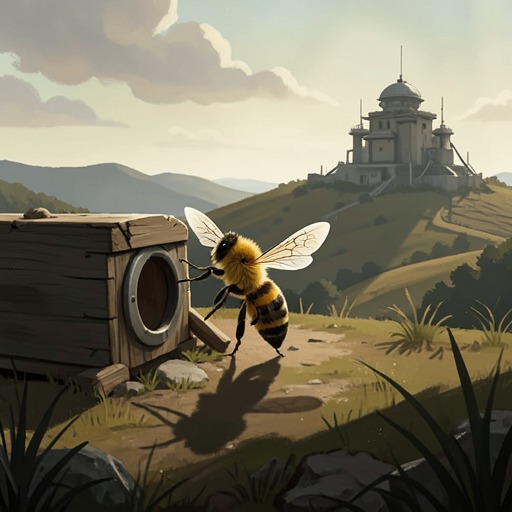
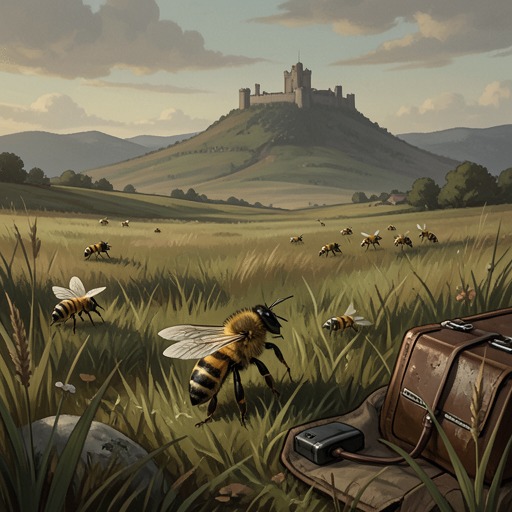
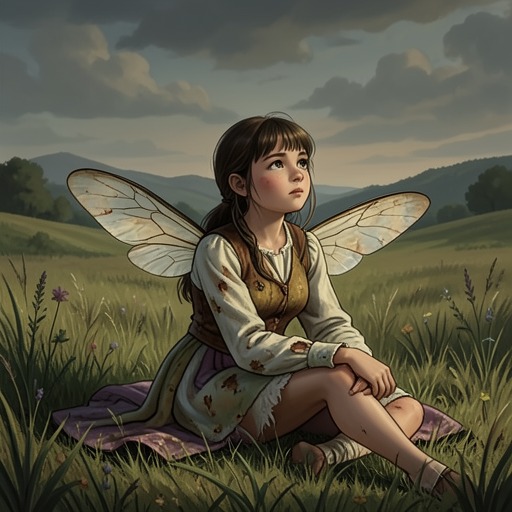
The Adventures of Maya the BeeMaya’s defining journey turns solitary exploration into public responsibility. Her life beyond the hive exposes her to unfamiliar creatures and ways of understanding the world; when she learns that the Hornets intend to attack, those experiences become essential to her people’s survival. Though she had left the hive, she returns with a warning, and Helen VIII makes her hard-won knowledge useful to the Nation of Bees.
Identity and Early Encounters
Maya belongs to the Nation of Bees, but her attention repeatedly carries her beyond its familiar world. At the silvery lake, she listens as a white butterfly points out the song of the dragon-fly. The encounter closes one moment of her lakeside experience: Maya lifts her wings, bids farewell to the lake, and flies inland. Her movement away from the water sets the pattern of a life shaped by meeting what she has not seen before.
Maya’s curiosity is not limited to graceful or reassuring encounters. Watching a beetle emerge from beneath a withered leaf, she studies its unfamiliar build: a plump body, thin slow-moving legs, and a thick head with upright feelers. The creature is Bobbie, whose strained courtship of Effie gives Maya a view of social expectations and personal embarrassment among other insects. Effie rejects him after learning that he is a tumble-bug rather than the rose-beetle she had thought him to be, and Bobbie protests that he wants to be loved for himself, not his work. The episode places Maya in the role of attentive observer, encountering distinctions and judgments that have no exact equivalent in her own community.
Curiosity and the Wider World
Maya’s questions also reach beyond insect society. One interlocutor responds to her question about human speech with uncertainty, even doubting whether human beings have a language, and describes their sounds as unmusical. Yet the same account concedes that people try to make their voices more pleasant, recalling two boys who made a whistle by blowing through a blade of grass. Maya’s interest draws out an explanation that is both comic and revealing: the speaker judges humanity by the sounds it makes while still recognizing its effort to communicate.
In another conversation, a butterfly explains that stink-bugs use an odoriferous drop to make themselves noticed. Because they are unpopular, the drop serves as a reminder of their existence; they want to be remembered. Maya responds by admiring the butterfly’s delicate white wings and introducing herself as a bee of the Nation of Bees. Her encounters bring together practical observation and social interpretation: she learns how one creature’s defense works, how another understands its place among others, and how to approach a stranger with open interest.
Maya also listens to the account of Hannibal, a Daddy-long-legs spider who lost a leg in an incident involving a human being. Hannibal describes humans as careless in their handling of other creatures, then begins a story about living in an ivy-covered garden-house with broken window-panes. The episode adds a less flattering account of humanity to Maya’s store of experience, while keeping her characteristic response in view: she settles in to hear what happened and treats another creature’s history as worth knowing.
Captivity and the Warning
Maya’s adventures bring her into the Hornet fortress, where she learns the immediate danger facing her people. She hears the Hornet queen announce that the warriors will assemble one hour before dawn and attack the Bee-city in the castle park. The plan is to plunder the hive and take as many prisoners as possible; the Hornet who captures Helen VIII and brings her back alive is promised a knighthood. This is specific intelligence, not a vague fear of hostility: Maya hears the timing, target, objectives, and reward attached to the assault.
After escaping the fortress, Maya leaves in haste and flies through the purpling dawn toward the woods, where she hopes to hide if the Hornet who let her go pursues her. The cold threatens her ability to keep flying, but she presses on. At the hive she reports the plan to Helen VIII, begins by asking forgiveness for failing in her duties, and says that she repents. She makes clear that she has escaped only shortly before and that the attack is planned for dawn. Her return changes the significance of her earlier departure: the knowledge gained outside the hive now gives her people time to prepare.
The Battle and the Bee Community
Maya’s warning reaches a community that responds with disciplined mobilization. The hive fills with anger and urgency, but the Bees are not disordered: soldiers take their assigned positions, scouts report that the Hornets are approaching, and wax-generators narrow the entrance with two thick partitions. Helen VIII watches from an elevated position as her aides carry out their duties. The preparations show the collective system Maya’s warning helps activate, though the account does not place Maya among the combatants.
The Bees meet the invading Hornets in a battle that tests the limits of individual strength. The first young officer to charge dies in the attack, and his death intensifies the resolve of the others. The Hornets’ greater size and armor give them advantages, but the Bees’ tactics use fresh ranks to defend the entrance and confront invaders who have been drawn deeper into the hive. As the fighting continues, the Hornets’ stings lose their force, while the Bees fight with the knowledge that their wounds can heal. The assault ends with the invaders inside dead and the Hornet force reduced to half its numbers.
After the defeat, an older Hornet identifies the Bees’ unity and loyalty as a source of strength that outweighs the invaders’ physical superiority. That judgment clarifies the political meaning of Maya’s return: she brings the warning, but it is the Bees’ coordinated commitment to one another that enables their defense. Her personal movement from departure to service parallels the community’s larger movement from danger to collective action.
Forgiveness and Lasting Role
Helen VIII does not treat Maya’s earlier flight as proof that she has forgotten her home. The queen puts an arm around her neck and recognizes that her heart remained loyal. She pardons Maya and appoints her to stay by her side and help conduct the affairs of state, expressly turning the young bee’s experiences and learning toward the good of her people and country. The Bees greet the decision with approval.
Maya’s story ends not with a return to her former place in the hive, but with a changed responsibility within it. She becomes respected and loved by her people, and her knowledge is remembered as contributing greatly to the Nation’s welfare. On quiet evenings she visits Cassandra, who lives on pension honey, and tells young Bees the stories of her adventures. The explorer’s encounters thus become part of the community’s shared memory: what Maya learned by going out into the world is carried back through her service and her storytelling.